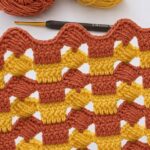
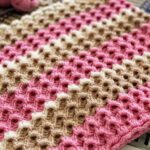
Two stitches. One repeat. A finished fabric that looks like you worked much harder than you did.
That is the Suzette Stitch in a sentence — and it is probably why so many crocheters keep coming back to it for blankets, scarves, and any project where they want something that feels considered without being complicated.
Here is everything you need to know to work it.
The Basics
Skill level: Confident beginner
What you need to know: Single crochet and double crochet. Nothing else.
Stitch multiple: Odd number of foundation chains
Best for: Blankets, scarves, wraps, cushion covers — anything where a soft, slightly dense fabric works well
Hook size: Whatever your yarn label recommends. Go up one size if you want a softer drape.
Materials
Any yarn weight in your chosen color or colors. The Suzette Stitch works across all weights — a fine cotton produces a lightweight, slightly open fabric well suited to warm-weather projects, while a worsted or bulky yarn creates the thick, cozy result most people associate with this stitch.
The texture shows best in solid colors or wide stripes. Narrow stripes can compete with the stitch pattern and make the surface feel busy. If you want to use multiple colors, changing every four rows or more gives the texture enough room to read clearly between color shifts.
You will need scissors and a yarn needle for weaving ends.
Abbreviations
ch — chain
sc — single crochet
dc — double crochet
st — stitch
How the Stitch Works
The entire Suzette Stitch is built on one pairing: a single crochet and a double crochet worked together into the same stitch, with the next stitch skipped. That pairing — sc and dc into the same stitch, skip one — repeats across every row.
The sc anchors the stitch to the fabric. The dc adds height and creates the slight lean that gives the surface its texture. Worked consistently across row after row, those two stitches together produce a fabric that is thicker and more dimensional than either stitch would produce alone.
The Pattern
Foundation Chain
Chain any odd number of stitches.
Row 1
Skip the first chain. In the next chain work 1 sc and 1 dc into the same stitch. Skip the next chain. Continue across: work 1 sc and 1 dc into the next chain, skip the following chain. Repeat to the last chain. Work 1 sc into the final chain. Turn.
Row 2
Chain 1 — does not count as a stitch. Work 1 sc and 1 dc into the very first stitch. Skip the next stitch. Continue across: work 1 sc and 1 dc into the next stitch, skip the following stitch. At the end of the row, work 1 sc into the last stitch. Turn.
All Remaining Rows
Repeat Row 2 until the piece reaches your desired length.
That is the complete pattern. Row 2 repeated is all there is from the second row to the final one.
A Few Things Worth Knowing
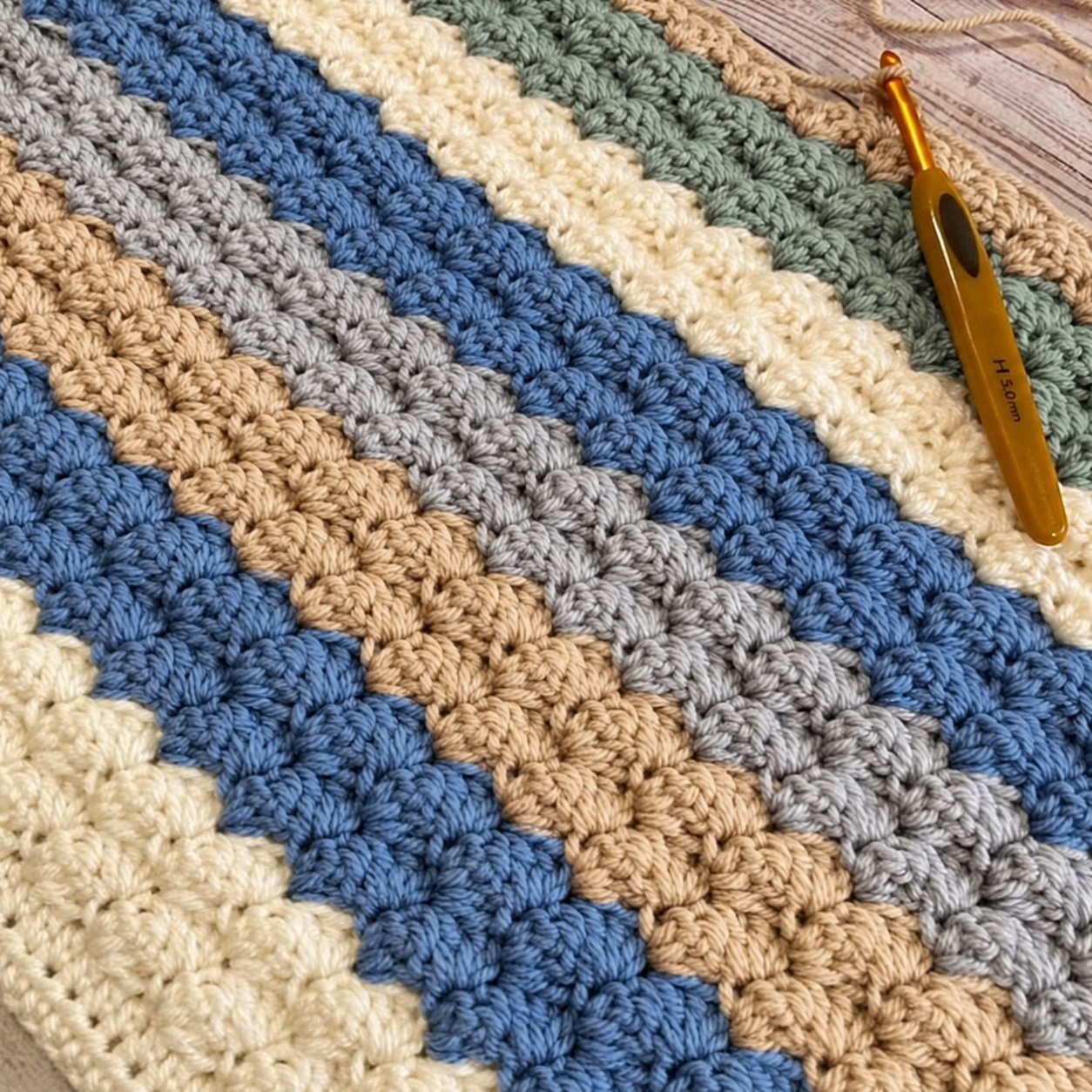
On finding your place: After two or three rows the stitch positions become easy to read directly from the fabric. The paired sc-dc stitches are visible as small raised units across each row, and the skipped stitches sit as clear gaps between them. Once you can see those units in the fabric you will not need to count every stitch — the work tells you where to go next.
On tension: The pairing of sc and dc into one stitch creates a naturally dense fabric. If the finished piece feels stiffer than you want, move up half a hook size before starting over. The stitch pattern does not change — only the drape of the finished fabric.
On color changes: To change color cleanly, work the final yarn over of the last sc at the end of a row with the new color. Complete the stitch with the new color and continue normally on the following row. This keeps the color transition at the row edge where it is least visible.
On counting: At the end of every row you should have the same number of paired units plus one sc at each edge. If the count is off, check whether you accidentally worked into a skipped stitch or skipped a stitch you should have worked into. The pattern is consistent enough that a missed stitch is usually easy to spot by looking at the row below.
What the Finished Fabric Feels Like
Dense and slightly spongy, with a surface that has a gentle horizontal texture from the paired stitch units. It is warmer and heavier than a plain single crochet fabric of the same size, which makes it well suited to blankets and cold-weather accessories. For a lighter result — a summer wrap or a lightweight scarf — use a DK or sport weight yarn at a relaxed tension and the same stitch produces a noticeably airier fabric.
Color Ideas
A single solid color in cream, warm grey, dusty blue, or sage green lets the stitch texture carry the entire visual interest of the piece. Wide stripes in two coordinating colors — four rows of one shade, four rows of another — create a calm, graphic result where the color and the texture complement each other without either one dominating. Both approaches are equally valid and the stitch supports both without any adjustment to the pattern.